What we regulate
Additionally, gambling companies need to comply with the Financial Action Task Force’s Recommendations. According to these rules, gambling companies must assess the risk of money laundering and terrorist financing in their business. All licensed operators must comply with the License Conditions and Codes of Practice (LCCP). In December 2023, the Gambling Commission launched a new ‘Tell us something in confidence’ service to report criminal and suspicious activity in the gambling industry.
These are the types of gambling licences you will need to run your gambling business. The first annual fee (for the non-remote Casino 2005 Act operating licence only) will be reduced by 50 percent. The first annual fee for a non-remote (2005 Act (opens in new tab)) casino licence is due six months after the licence is issued to you. A large casino under the 2005 Act (opens in new tab) has a minimum table gaming area of 1,000 square metres and a minimum non-gambling area of 500 square metres.
A provisional statement may be obtained from a licensing authority, in advance of a premises licence, where premises are to be constructed or altered, or where someone has yet to acquire the right to occupy premises. Pool-betting on a track, by the track occupier, will require a pool betting operating licence to be held. Premises licences will be granted by licensing authorities (as defined in section 2), not the Commission. 400.Part 8 of the Act describes the new regime for the licensing of premises where facilities for gambling may be provided. Licesning authorities notify the Commission when they issue these licences and the Commission maintains a database of these notifications. Licensing authorities are responsible for issuing premises licences.
Remote gambling and software technical standards do not apply to the software you provide for overseas operators who are not licensed by the Gambling Commission. The firm’s entire team works exclusively within the betting and gaming sector, ensuring an in-depth, real-time alignment with the industry’s evolving landscape. Wiggin serves as the leading advisor to the global gambling industry’s top players, setting itself apart by understanding both national and international laws and regulations like no other firm. Wiggin extends its reach to the centre of European decision-making, maintaining a Brussels office that advocates for clients on various EU-related issues, including copyright, audio-visual regulations, data protection, competition policy, trade and e-commerce. He is a commercial and regulatory lawyer and specialises in all aspects of online and land-based gambling.
Remote casino operating licence
In the 2024–25 reporting year, 156 new operating licence applications were submitted and 75% were processed within 16 weeks. The Advertising Standards Authority (ASA) regulates gambling advertising, though LCCP breaches by licence holders are enforced by the Commission itself. The most recent significant RTS update came into effect on 17 January 2025, extending requirements previously applicable only to slots to a wider range of online casino products.
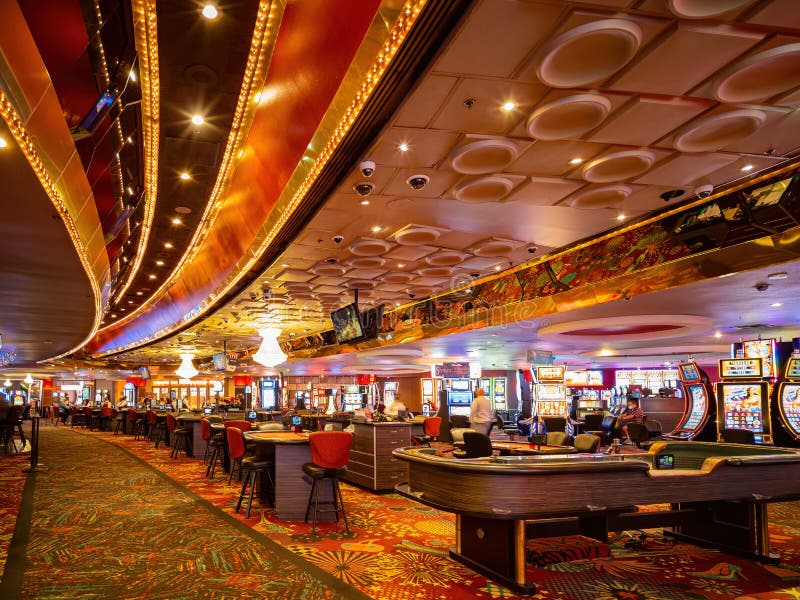
Premises Licenses relate to non-remote businesses and give permission for using facilities to operate as casinos (or for other gambling activity). Furthermore, the UK has specific regulations for remote gambling operators. Covers high street betting shops, casinos, bingo halls and adult gaming centres. Navigate our comprehensive database of Gambling Commission licensed operators, brands and licences For casinos which exercise the extended entitlement and other larger converted casino premises, a new mandatory condition in paragraph 4 of Part 5 of Schedule 1 to the 2007 Regulations requires that the floor area of the gambling area is less than 1,500m². New paragraph 3 of Part 5 of Schedule 1 to the 2007 Regulations attaches additional mandatory conditions to converted casino premises licences that apply only if the holder decides to exercise the extended entitlement.
This will include assessing the role of sessions limits across Category B and C machines alongside safer gambling tools. All options set out in this section are expected to lead to an increase in the total number of Category B machines across bingo and arcade venues. Any measure that increases the availability of Category B machines risks leading to increased gambling harm for those playing on the machines. Although the data on mixed sessions creates some uncertainty, we conclude that overall, Category B machines lead to higher losses than Category C or D machines. On the other hand, the data shows that a substantially higher proportion of sessions on Category B machines ended in a loss over £200, compared to Category C, Category D and mixed machines. For comparison, these rates are above the at-risk and problem gambling rates for bingo games (12.9% and 3.3% respectively), but lower than the at-risk and problem gambling rates for online gambling on slots, casino or bingo games (44.2 % and 8.7% respectively).
This was reflected by licensing authority responses in regards to how much the maximum premises fee should be raised by. The majority of respondents agreed that premises should adopt voluntary test purchasing as a way to monitor under-18s activity on ‘cash-out’ Category D slot-style machines. In relation to measures that venues should adopt to ensure no under-18s play on these types of machines, responses included additional staff checks on customers, staff training and placing machines in visible areas near cash desks or prize bars. Our proposal to introduce an age limit on these machines is a precautionary measure to protect children and young people from gambling-related harm.
Print Options

Therefore, allowing casinos to provide sports betting services will open up a new section of the market to them. In addition, the current GGY derived from betting in casinos where it is permitted, is very small. All casinos to be permitted to offer sports betting. We would not permit betting in Scottish 1968 Act casinos until Scottish Ministers have had the opportunity to consider what (if any) restrictions or protections they would like to put in place by way of amendments to the Mandatory and Default Conditions Regulations. While permitting betting in 1968 Act casinos is not a reserved matter, as outlined above, we intend to impose a limit on the number of SSBTs that can be made available in a casino. We intend to place some restrictions on the number of SSBTs to avoid a scenario in which the product offering becomes unbalanced and a large number of these machines are sited in a relatively small gambling area.
As a result, these venues will be entitled to choose between adopting any revised entitlement set down in legislation following this consultation or retaining the four Category B machine allowance for AGC premises and eight Category B machine allowance for bingo premises. The proposals outlined in this consultation to reform the 80/20 rule will again permit AGC and bingo premises to retain these legacy rights where the relevant premises licence was granted before 13 July 2011. Further information about premises licence fees are outlined in Chapter 5. The Gambling Commission will also need to be notified of an operator’s projected annual licence fee category based on GGY for the forthcoming licence period, so that the correct fees can be paid.
This will be used to model the estimated increase in GGY for each option in the final impact assessment. Therefore, we cannot currently estimate the total increase in GGY for each option. We welcome further evidence on this in the consultation response. Energy costs per machine will be estimated in the final stage impact assessment using an energy calculator.
(Mandatory response) Yes / No / I don’t know (Mandatory response)Yes / No / I don’t know / Not applicable (Optional response)Open text box (Mandatory response)Yes / No / I don’t know If licensing authorities do not feel like they have the powers they need, we would like to know whether any changes could be made to the regulatory framework to address this issue.
We anticipate that our proposal to allow operators to increase their number of Category B machines to 50 percent will enable operators to better meet customer demand, and in turn minimise the likelihood of ‘available for use’ guidance being subverted. The Gambling Commission has expressed concern that operators currently seek to maximise Category B machine numbers by providing Category C and D games on inaccessible small tablets or via in-fill machines. For example, some options may place further emphasis on achieving commercial flexibility than achieving customer choice of higher and lower staking machines, and vice versa.
Open a review for the detailed test results, or head straight to the casino site. The experts at Online-Casinos.com have tested over 120 casino sites to find perks like fair bonuses, high payout rates, and diverse games. The UKGC implemented this to prevent players from becoming addicted to gambling and spending more than they can afford.
As above, 1968 Act casinos will retain the option of continuing to operate under the existing regime should they not wish to increase their machine allocations. We would like to make the process for taking up the entitlement of additional machines as simple as possible for both operators and licensing authorities. Anecdotal evidence shows that only three of the 2005 Act casinos offer betting, representing about 0.2% of the total GGY for each of those casino premises. There has been no evidence that permitting betting in 2005 Act casinos resulted in increased harm, and the Gambling Commission’s view is that permitting sports betting in 1968 Act casinos is unlikely to have any particular impact on the Act’s licensing objectives. There are likely to be indirect costs in the form of displacement from online sports betting as those in casinos who would otherwise have bet on sports using mobile devices may be more inclined to do so using casino services.
In considering operating licence applications the Commission will include assessment of the suitability of those persons considered relevant to the application. Personal licences are required by those performing a specified management or operational function. Further guidance as to the types of operation or activity that might be exempt from requiring an operating licence can be found on our website. This chapter sets out the Commission’s approach to considering operating and personal licence applications, the kinds of evidence considered when assessing an application, and the process for assessing applications and notifying the outcome. To fully comply with this provision, operators are required to refrain from placing ads that promote betting on websites that target children. Under the new rules, financial penalties paid by British gambling operators would be paid directly to the government’s accounts, rather than being directed to charities and research bodies.
They have the appropriate OL requirements in place and will be providing betting facilities on their converted casino premises. A 1968 Act casino operating licence holder wishes to take advantage of the new activities and entitlements afforded by the new Regulations. The licensee can do this by making an application to vary their premises licence to the relevant licensing authority. Where an application to vary a premises licence is required, the licensing authority’s Statement of Principles may include more detailed guidance on what should be covered in the application.

A sliding scale was proposed in the consultation which detailed potential requirements across (i) gambling space; (ii) table gaming space; (iii) non-gambling area; and (iv) machine to table ratio. All casinos will be allowed to offer betting, which was previously restricted to 2005 Act casinos. We will also permit a smaller increase in machines for venues that do not meet the size requirements, proportionate to their overall size and non-gambling area. This consultation relates to land-based gambling provided to customers in Great Britain, by operators who are consequently required to hold the appropriate licence from the Gambling Commission.
- That said, non-gambling services are generally carved out of this wide net – payment processing, marketing affiliates and other ancillary services such as fraud prevention and age verification are per se not regarded as “gambling”.
- Search for the operator by name or licence number and confirm the licence status shows as “Active”.
- The personal information we collect and process is the data provided to us directly by you in the responses to this consultation.
- First thing to do is to check the casino’s footer for the UKGC logo.
We publish registers of licensed non gamstop casino businesses, individuals, regulatory actions and premises. The government will increase the maximum cap that licensing authorities can charge by 15% through a made negative statutory instrument. We do not believe that a 10% increase is sufficient to future-proof licensing authority funding in line with the recovery of the land-based sector from the challenges of COVID-19 and rising energy prices in recent years.
From selling personal data and identity theft to promoting gambling to vulnerable players, these safety regulations are important. Safety is the biggest factor for us, as licensed casinos are required to comply with the UKGC’s regulations. To help us maintain accurate records, we find it useful if licensing authorities also inform us if they revoke a premises licence (for example, due to non-payment of the annual fee). To obtain a premises licence, a person or business must first hold an operating licence from us authorising them to carry out the activity in respect of which the premises licence is applied for. Obtaining a gambling license for an offline casino in the UK is impossible without permission to own and operate dedicated gambling premises. The United Kingdom is one of the most developed countries in the gambling industry, where casinos and other forms of gambling are officially permitted.
This will act as a safeguard in case someone tries to put more than £100 onto the machine. It will also help mitigate against the risk of someone putting a significant sum of money onto a machine in one go. Using a debit card on a machine is a different experience for the customer compared to cash or tickets where a process such as going to an ATM has been undertaken before the person can put money onto the machine. The maximum transaction limit, aligned with a minimum transaction time, will provide an additional point of friction to the customer if they wish to put more than this amount onto the machine. However, customers can continue to deposit money onto the machine without needing to pause or undertake an action. Some responses stated it should be £1, in line with their view that cashless payments should not be permitted at all.
In practice, venues which include sportsbooks as part of their product offering do not utilise a maximum of 40 — the largest casino by gambling area currently sites 12 terminals. The white paper set out the intention for all casinos to be able to include a sportsbook as part of their product offering. A further advantage would be allowing operators to create an experience which competes with international gaming jurisdictions, and elevates the reputation of Britain as a gaming destination for international gaming tourists. For example, it may lead to increased popularity/GGY of casinos which could have knock-on benefits to surrounding businesses or other sectors which are closely interlinked with it, for example the food and beverage or advertising sectors.
This would also apply for in-fill and tablet gaming machines. Our objective in reforming the ratio of Category C and D to Category B gaming machines is to support a sector which has experienced significant commercial challenges in recent years through increased flexibility over their gaming machine offer. This chapter outlines the evidence received in relation to the white paper proposal to amend the ratio of Category C and D to Category B gaming machines in arcade and bingo venues.
If a casino’s name keeps popping up for at least one wrong reason, we do not even think of recommending it. Quick payouts, low fees, and a solid lineup of UK-friendly payment options – that is what we are looking for. Just so you know, if a casino cuts corners, it is instantly out. One thing is to skim a casino’s homepage. All experienced gamblers first, and casino testers second.
The policy proposals set out in this government response are intended to modernise the land-based gambling sector and help it to thrive sustainably. In addition, operating costs have risen significantly over this period, especially as a result of rising energy costs, which have increased by over 225% for some operators. The land-based gambling sector, unlike the online gambling sector, has faced significant challenges in recent years as a result of business inactivity during periods of COVID-19 restrictions. In September 2019, the Gross Gambling Yield (GGY) generated by remote gambling overtook that of land-based gambling for the first time (excluding lotteries). The white paper acknowledged that the emergence of new technology and the availability of online gambling since the Gambling Act 2005 came into force has substantially altered the gambling landscape. Measures relating to casinos – one draft affirmative and one made negative statutory instrument.